Context
Deliver My Container (DMC) is a UK-focused SaaS marketplace connecting importers with freight forwarders. The listings interface is the platform's engine, the space where importers monitor live auctions, compare quotes, and manage the lifecycle of active shipments.
The Problem: Competing with Legacy Workflows
The original interface utilised a card-based layout. While visually modern, it created a "friction gap" that made digital management feel more cumbersome than the legacy workflow it aimed to replace: fragmented email chains.
Key Pain Points Identified:
- Information Fragmentation: Cards lacked the "at-a-glance" density required for complex logistics data, such as multi-container mixes or specific HS codes.
- High Interaction Cost: Comparing three different quotes required significant vertical scrolling. In a high-stakes logistics environment, this delay led to users reverting to spreadsheets and email.
- Rigid Architecture: The layout was not "future-proof"; adding new data fields (like customs clearance status or cargo ready dates) required redesigning the entire card.
- Lack of Comparison Logic: Importers need to benchmark forwarders side-by-side to make informed decisions. The card model made this comparison cognitively taxing.
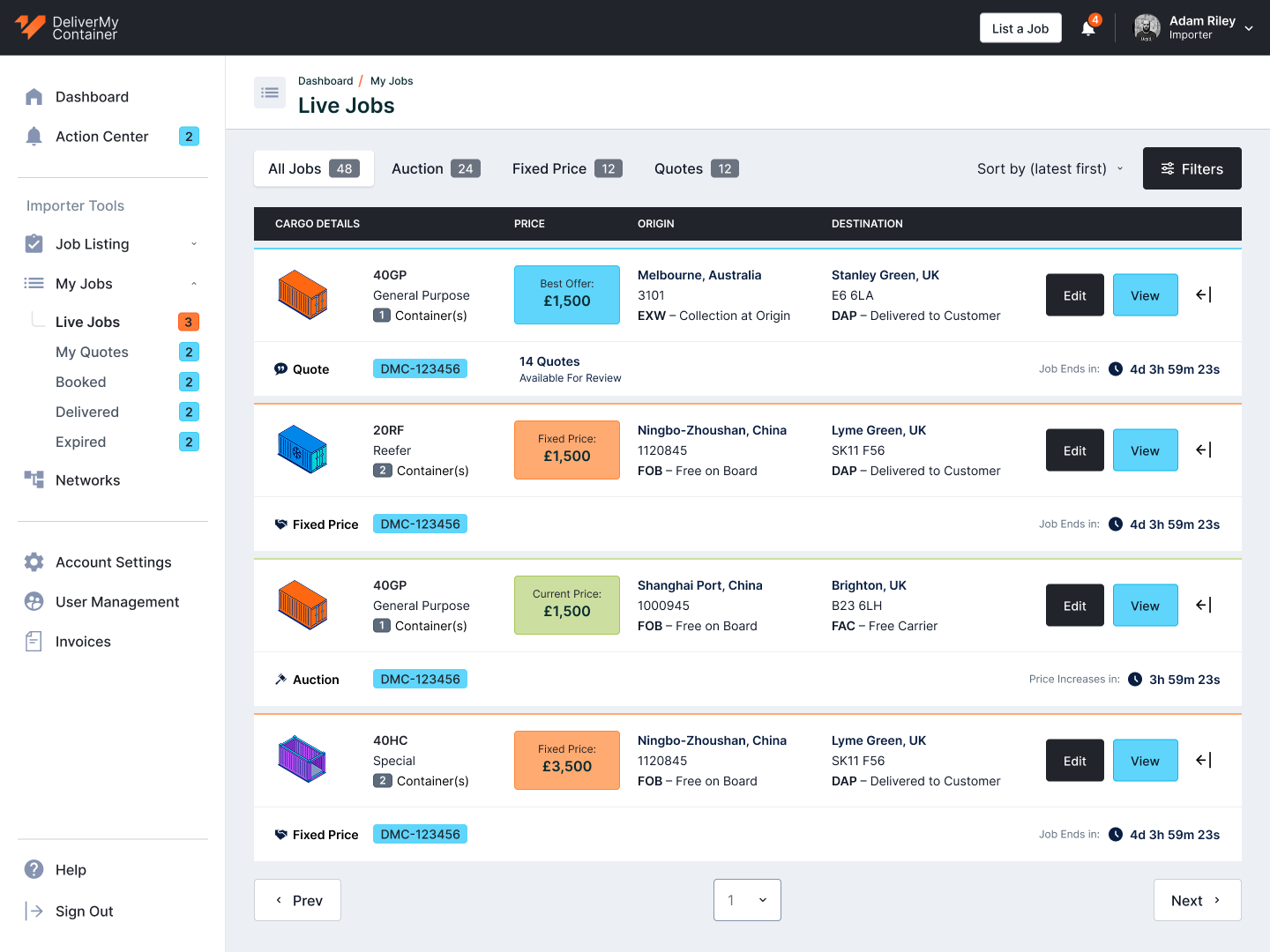
Original Design of the Live Jobs Dashboard
- Legacy Spacing: Consumer-centric layout wasted vertical real estate, forcing power-users into excessive scrolling to find specific jobs.
- Hidden Logic: Critical Incoterm data was treated as secondary information, obscuring the operational shape of the job.
My Role: Leading the Structural Pivot
I led the shift from a B2C "Discovery" UI to a B2B "Productivity" UI.
- Information Architecture Audit: Conducted a full IA audit, evaluating the scalability of the card model against the product roadmap and restructuring the data hierarchy into a table-based framework.
- Table-Based Framework: Designed a dense, spreadsheet-inspired table to allow for horizontal scalability.
- Conditional Field Logic: Implemented UI rules where columns dynamically update based on the Incoterm (e.g., hiding collection details for Port-to-Port FOB jobs).
- Visual Hierarchy: Defined a new system for status badges and urgency indicators to aid "housekeeping" tasks.
Business & Technical Constraints
- Data Integrity: A "Job" must represent a single shipment context (one route, one Incoterm) to ensure forwarders can quote accurately.
- Legacy Logic: The redesign had to integrate with existing backend status structures while meeting a business requirement for "high-visibility" data.
- Mental Model Alignment: Logistics professionals are power-users of spreadsheets. The UI needed to lean into this existing mental model rather than fighting it.
The Strategic Shift: Productivity over Aesthetics
The pivot to a table-based interface was a strategic move to prioritise Information Density.
- Scannability: Importers can now scan 10+ jobs simultaneously, reducing the time spent on manual oversight.
- Direct Comparison: Placing bids and quotes in a structured row allowed for instant price and service benchmarking.
- Bulk Management: The new structure laid the groundwork for bulk actions, a critical requirement for scaling the platform.
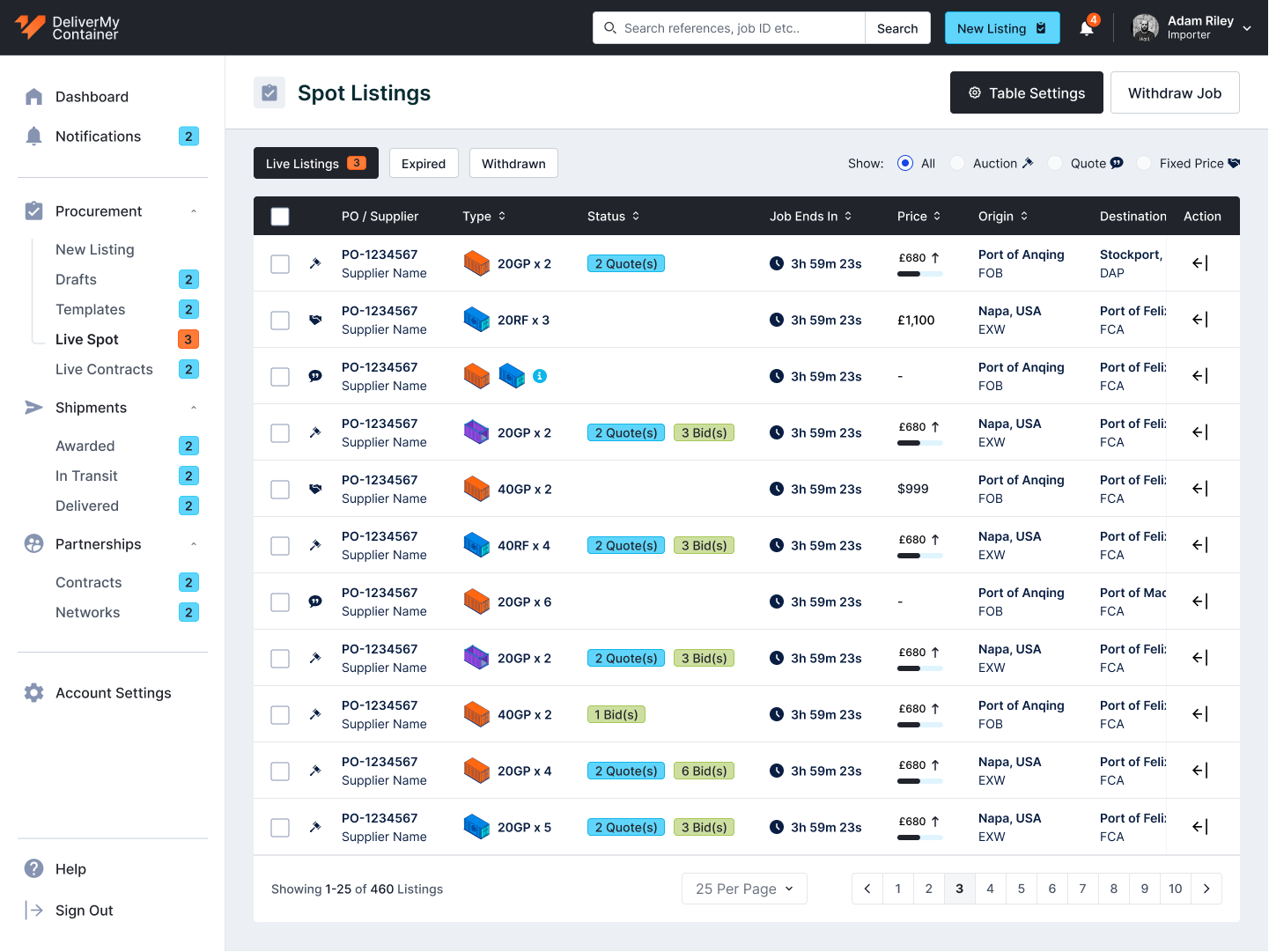
New Design of the Live Jobs Dashboard
- Operational Density: Dramatically increased job visibility on the primary dashboard, aligning the interface with the spreadsheet-based mental models of logistics professionals.
- Standardised Equipment Icons: Introduced visual shorthand for equipment mixes, allowing forwarders to assess cargo requirements at a glance.
- Contextual Status Badges: Replaced text-heavy status descriptions with interactive badges acting as direct Call To Actions, reducing cognitive load during high-stakes decision making.
Outcome
User feedback following the redesign was overwhelmingly positive, with importers specifically citing improved clarity and speed of review as key improvements. The shift to a table-based interface directly addressed the core adoption barrier that had previously led users to revert to spreadsheets and email, with the structured quoting format also resulting in more accurate bids and fewer manual clarifications between importers and freight forwarders. The scalable architecture means the platform can now absorb new data requirements without a structural overhaul.