Context
The reverse auction model wasn't born from a design workshop, it was adapted from a proven pricing mechanic used in the founders' previous car delivery business. Having seen first-hand how time-sensitive, competitive bidding could drive fair market pricing in one logistics vertical, the team recognised the same opportunity in container freight. My role was to translate that domain expertise and commercial logic into an intuitive, scalable UI that worked for both importers and freight forwarders.
The Problem: Market Volatility & Static Pricing
The container freight industry suffers from rapidly fluctuating prices and opaque quoting. Key Pain Points Identified:
- Pricing Rigidity: Fixed-price listings often fail because the price is either too high for the importer or too low for the forwarder to accept, leading to "expired" jobs.
- The "Email Haggle": Without a structured bidding system, users revert to email to negotiate prices, which is slow and inconsistent.
- Lack of Urgency: Traditional "Get Quote" models have no deadline, meaning jobs can sit indefinitely without being filled.
- Manual Intervention: Importers previously had to manually review every single response, which increased administrative overhead.
My Role: Designing the Auction Interaction
I led the design of the end-to-end auction interaction, focusing on making complex financial logic feel intuitive for both sides.
- Dual-Path Interaction: Designed a workflow that allowed forwarders to choose between "Buy Now" (instant win) or "Place a Holding Bid" (automated win).
- Trigger-Based Logic: Defined the UI for "Holding Bids," where a forwarder sets their minimum acceptable price. If the auction's rising price hits that trigger, the system awards the job automatically.
- Urgency Signaling: Implemented real-time countdown timers ("Job Ends In") and price-status indicators to drive participation as the auction neared its cap.
- Visibility Controls: Integrated "Public vs. Private" network selection, allowing importers to run auctions only with trusted partners if they chose.
Business & Technical Constraints
- Automated Price Logic: The system requires a logic where the price starts at a "floor" and increases automatically over time, capped at the importer's maximum.
- The "Buy Now" Conflict: We had to balance the auction's time-saving automation with the ability for a forwarder to "instantly" secure a job if the current price met their needs.
- Transparency vs. Anonymity: To prevent "race to the bottom" behaviour that damages forwarder relationships, we had to ensure the bidding process remained structured and professional.
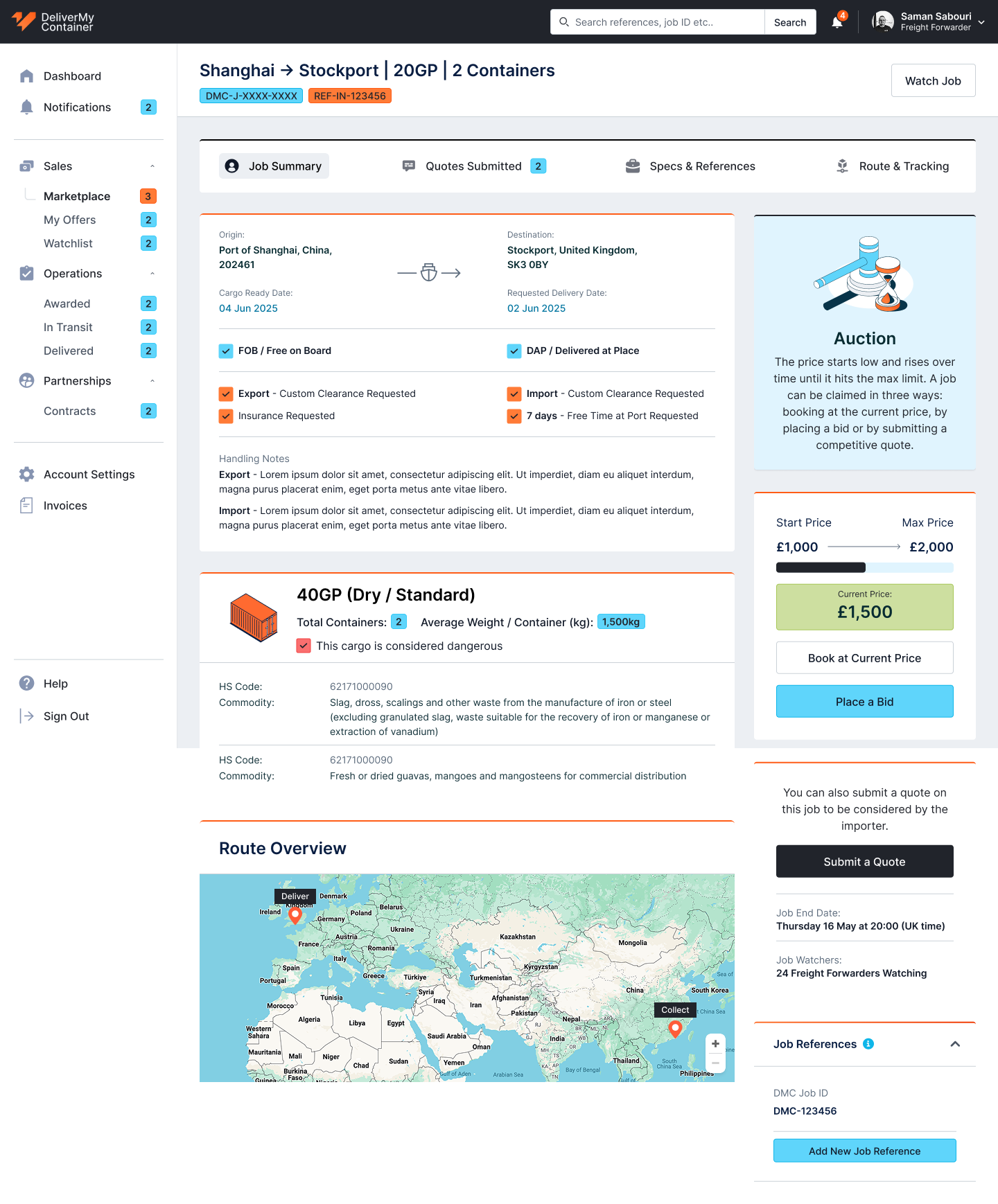
Design of the "Job Details" page


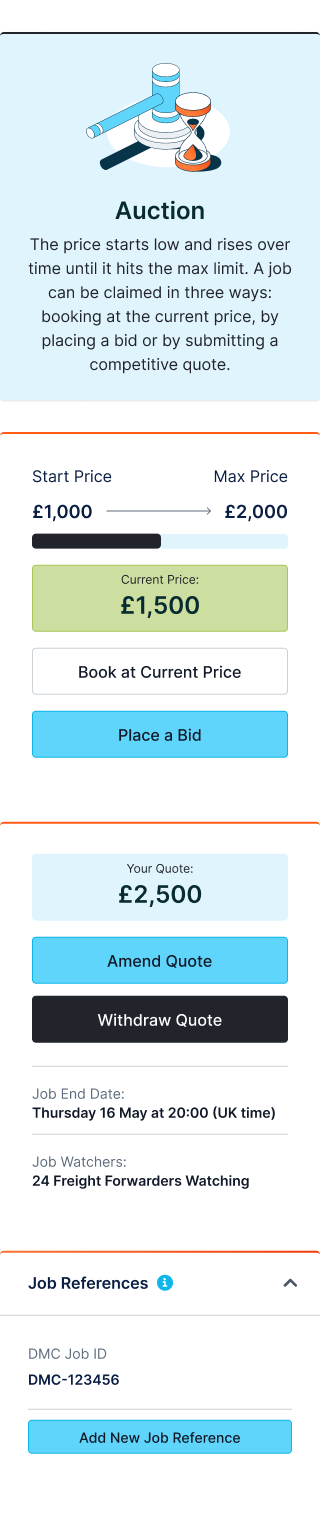
Design of the different states of the side bar in relation to the auction
- The UI provides real-time feedback on the auction's progression. By showing the 'Price Increases In' timer, we drive participation and simulate the urgency of a live trading floor.
- Unlike traditional 'blind' auctions, we display the importer's maximum price. This allows forwarders to instantly calculate their potential margin and decide if they want to 'Watch' or 'Win' immediately.
The Strategic Shift: From Manual Selection to Automated Awarding
The key innovation was moving away from a "bid-and-wait" model to an automated trigger model.
- Eliminating the Wait: By introducing "Holding Bids," the importer no longer needs to be online to "accept" a bid; the system handles the award the moment the price is right.
- Fairness in Priority: Implemented a "first-in-wins" logic for identical holding bids, encouraging forwarders to engage with the platform early.
- Market Alignment: The rising price model mirrors real-world freight behaviour where capacity costs more as the "cargo ready date" approaches.
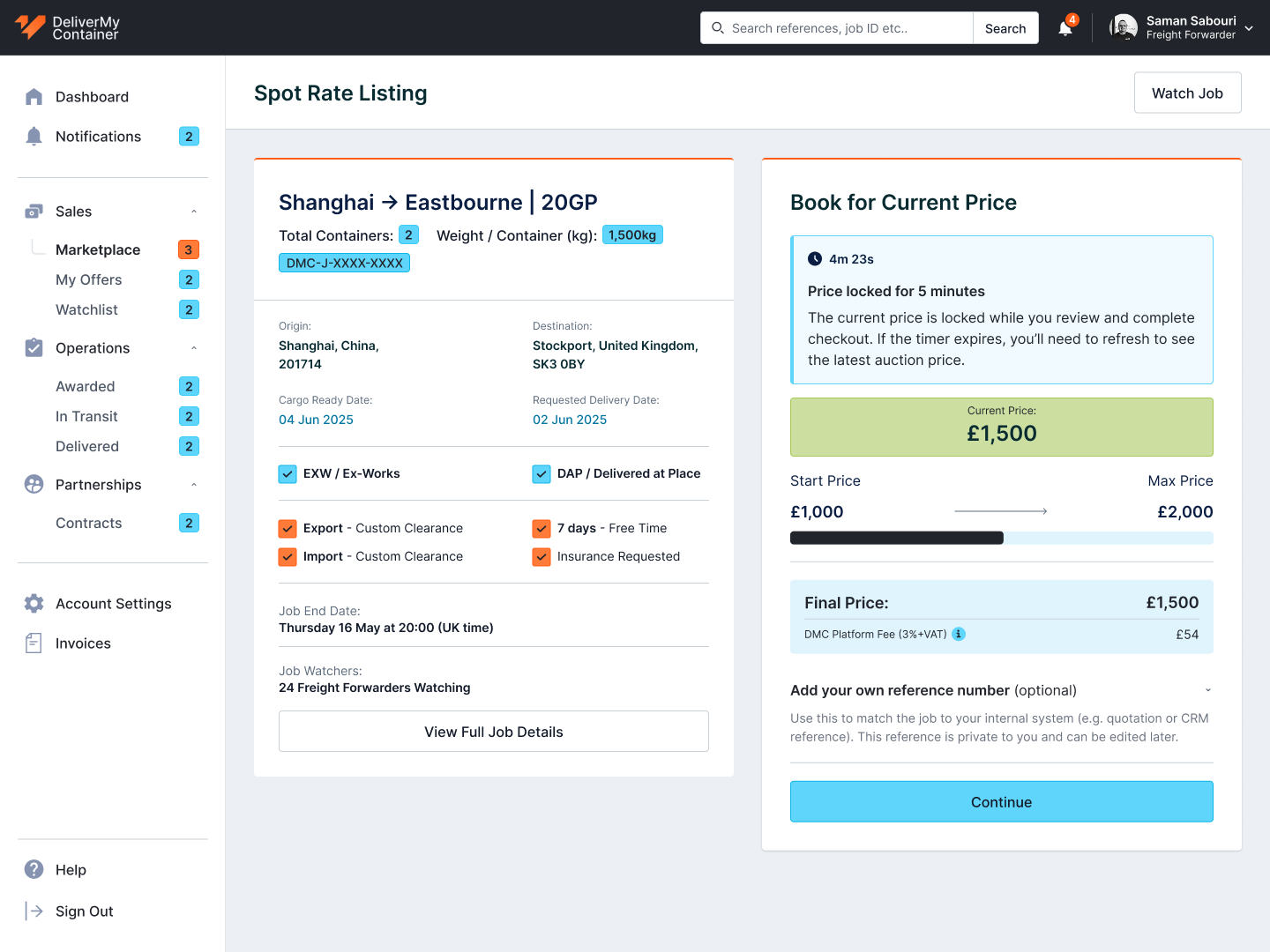
Design of the confirmation bid page
- Next step in the journey once either "book at current price" or "submit bid" has been selected.
- To prevent operational friction, the final review step explicitly restates the cargo weight, equipment type, and Incoterm responsibilities. This ensures the forwarder has the right vessel capacity before committing funds.
- Designed a high-clarity commitment screen that summarises the total financial obligation, mirroring professional procurement standards.
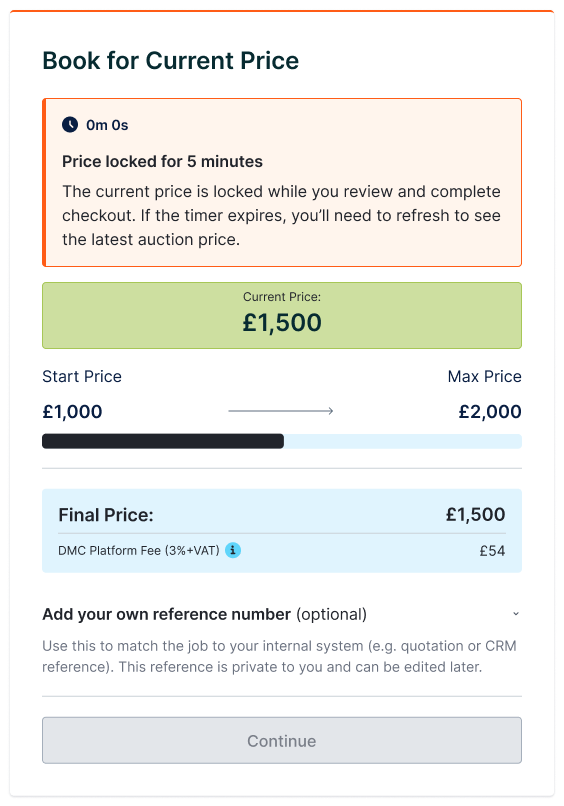
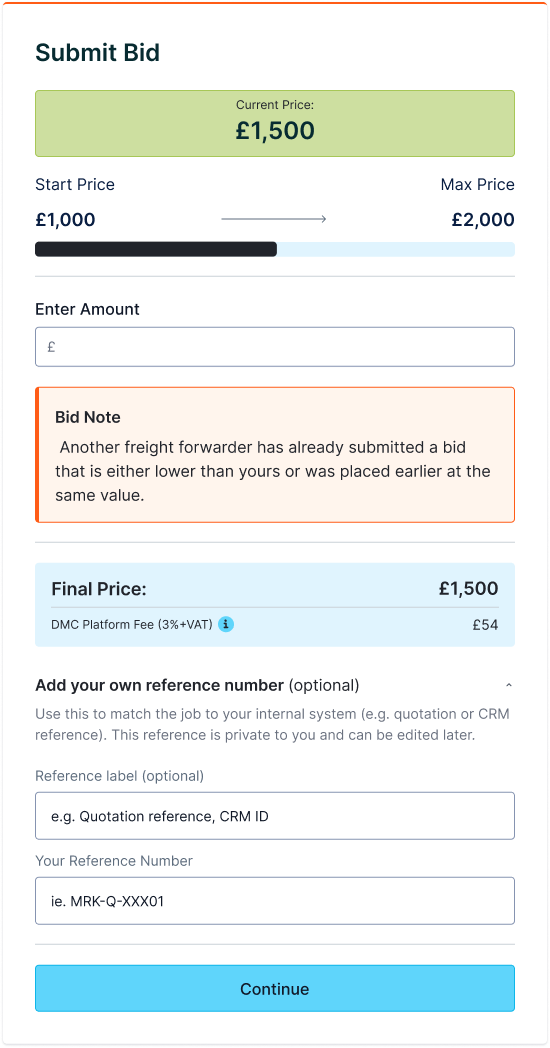
Design of the two different bid outcomes
- These are the two different outcomes depending on whether the user selected booked at current price or they are just submitting the bid.
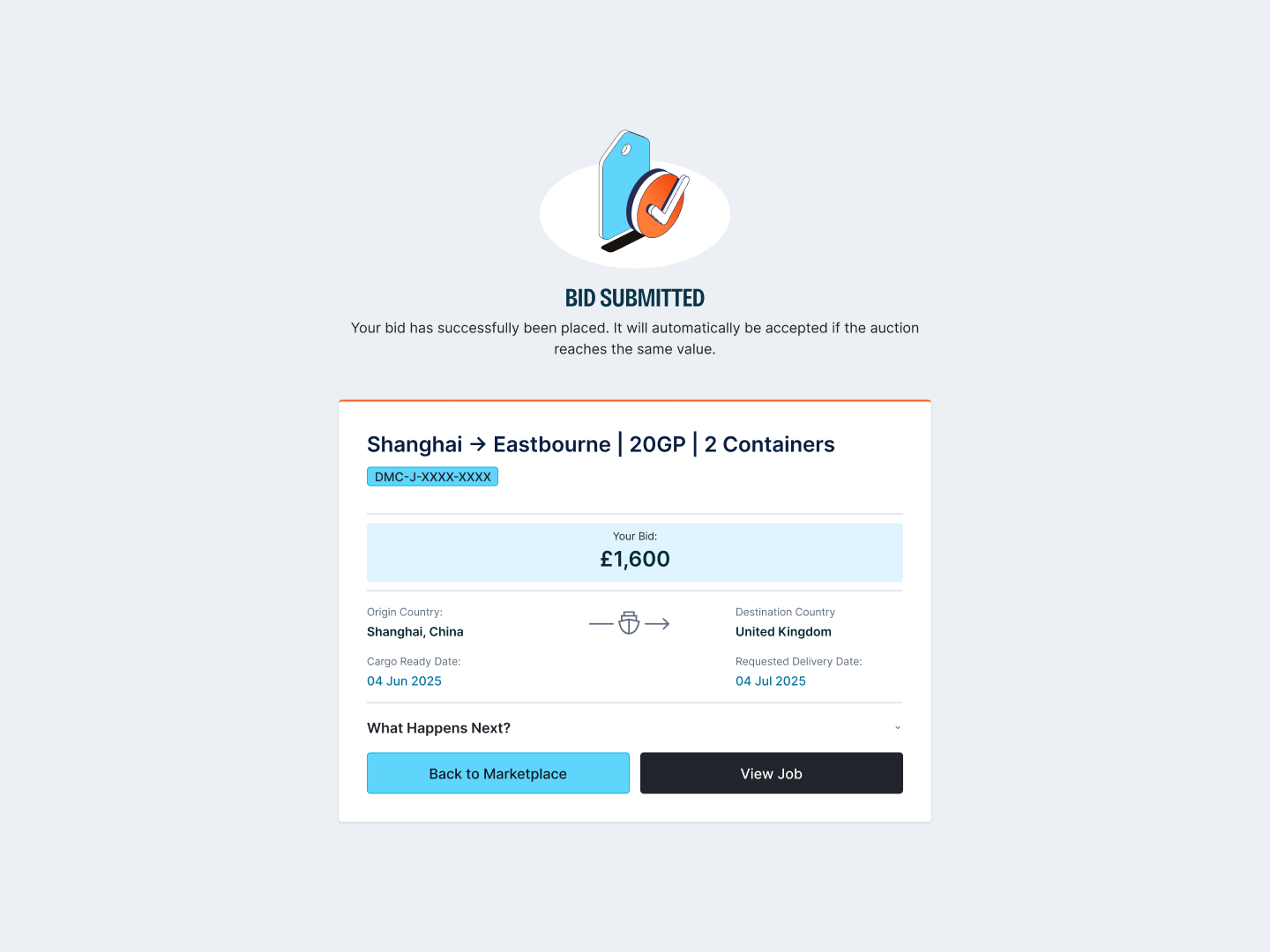
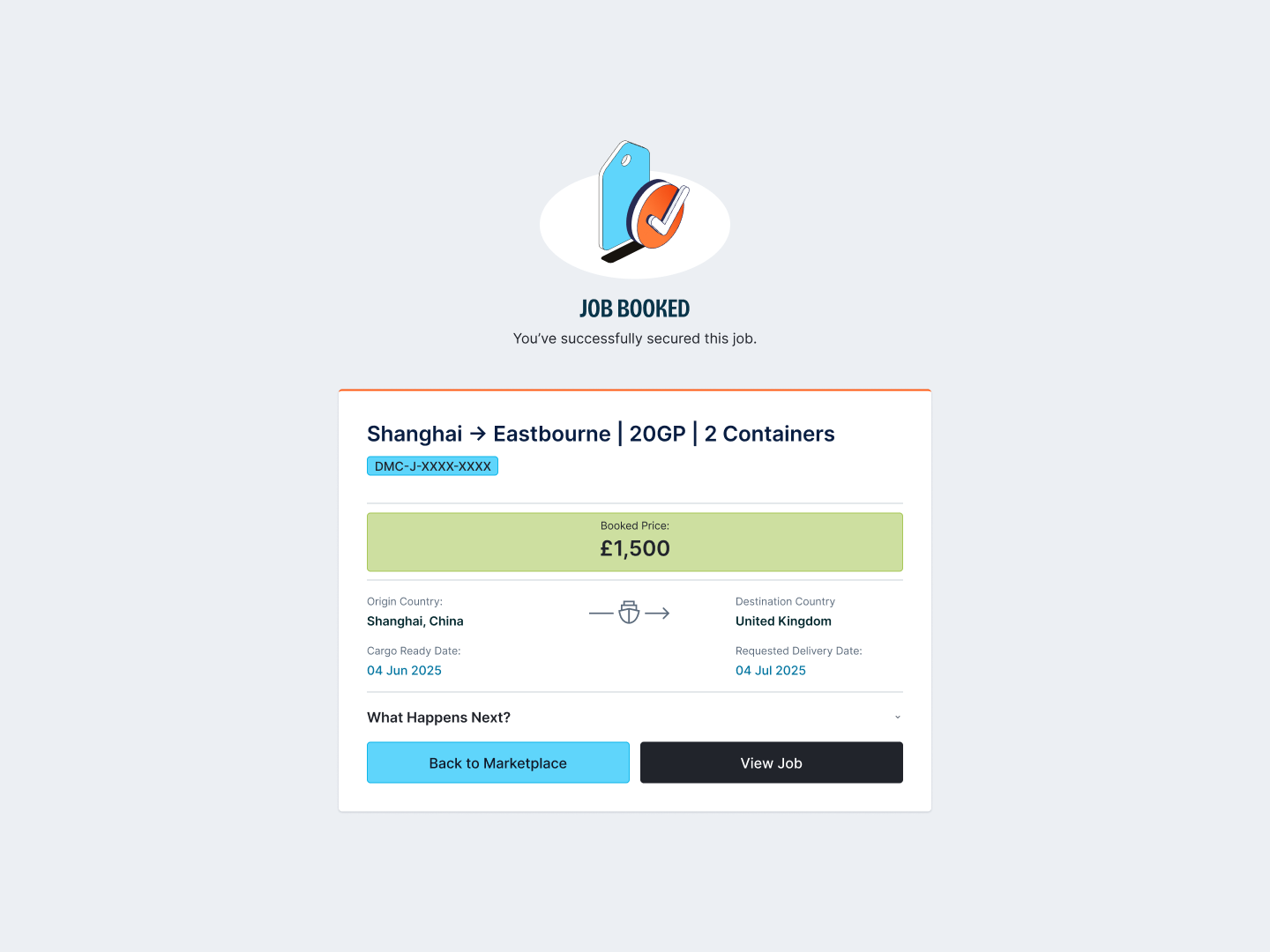
Design of the two different outcomes once confirmed
Outcome
The response from freight forwarders was overwhelmingly positive. The holding bid system resonated immediately as the forwarders understood instinctively that it worked in their favour, allowing them to compete for jobs without ever dropping below their minimum acceptable margin. On the importer side, the price ceiling meant budgets were always respected. The result was a pricing mechanic that felt fair to both parties, removing the adversarial tension that typically characterises freight negotiation and replacing it with a transparent, automated process that both sides could trust.